
When we feel well, health tends to move down the list.
There is work to do, family to look after, places to go and very little reason to think about seeing a doctor if nothing seems wrong.
For Dr Oscar Horky, that is exactly why feeling well can be a useful time to understand more about your health.
“The goal is to keep feeling healthy for as long as possible,” he says.
That thinking sits behind the Foundational Health Assessment at Phoenix Health Co. It is a chance to establish where you are now, understand the things you may not be able to see or feel, and decide whether there is anything worth acting on earlier.
It can also tell you what is already going well.
What can't you see in the mirror?
How we look and feel tells us something about our health.
It doesn't tell us everything.
Oscar describes a health assessment as an opportunity to look “under the hood”.
Family history, blood results, body composition, cardiovascular fitness, sleep, diet, lifestyle and the way we move can add information that is difficult to judge from appearance alone.
Sometimes that may identify something worth paying attention to.
Sometimes it may simply confirm that the things you are already doing are serving you well.
For Oscar, both are useful.
“I think there is a fear sometimes that if we look, we're going to find something we then have to deal with,” he says.
“But an assessment can also reinforce where things are going well. It can identify strengths and give someone a clearer idea of what is actually worth focusing on.”
Why a baseline matters
There is another reason Oscar is particularly interested in people establishing a health baseline in their 40s and 50s.
Time.
Our strength, aerobic fitness, mobility and body composition can change as we age. Lifestyle, family history and other individual factors can also shape what becomes more important over time.
Knowing where you stand now gives you something meaningful to work from.
It also gives you something to come back to.
If you change the way you exercise, improve your diet, prioritise sleep, stop smoking or make another change to your health, having an earlier baseline can help put future results into context.
Oscar sees it as building reserve while there is time to do something useful with the information.
“The more time we have on our side, the greater the advantage,” he says.
Looking beyond body weight
The bathroom scales are a simple example.
They tell you what you weigh.
They don't tell you how that weight is distributed.
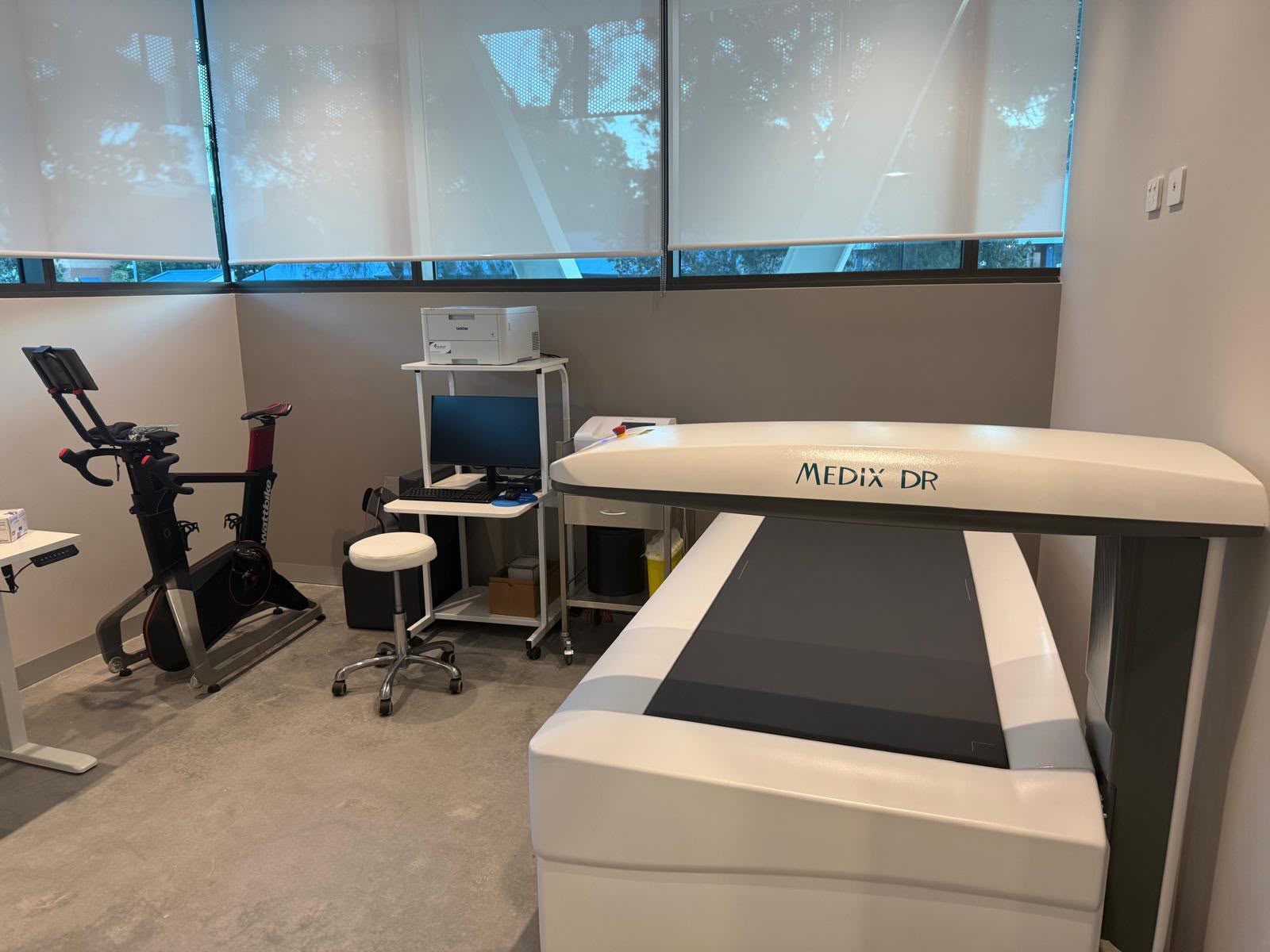
A DEXA body composition scan can provide a more detailed view of measures including muscle mass and fat distribution.
That changes the conversation.
Instead of focusing only on losing weight, someone may discover that maintaining or building muscle deserves more attention. Another person may need to think differently about body composition despite having a weight they have always considered healthy.
The useful question becomes less about the number on the scales and more about what the information means for you.
VO₂ max is not just for athletes
VO₂ max is another measure many people associate with elite sport.
It is a measure of cardiorespiratory fitness and gives an indication of how effectively the body can use oxygen during physical effort.
For someone who has no intention of competing in anything, that may sound largely irrelevant.
It isn't.
Cardiorespiratory fitness is an important marker of health, and knowing your starting point can help guide the way exercise is prescribed and progressed.
Oscar sees the value in having a measure that can be revisited.
You establish where you are now, make changes where they are appropriate, and have something objective to compare with later.
Again, the number itself is not the goal.
It helps create direction.
Making the information useful
That is also why Phoenix does not look at one result in isolation.
The Foundational Health Assessment brings together medical history, family history, investigations and an understanding of the person's lifestyle and goals.
The aim is to work out what matters most for that individual.
Oscar is wary of giving somebody a long list of things they suddenly need to fix.
Life is already busy.
For one person, the most useful step may be improving strength or cardiovascular fitness. For someone else, it may be sleep, nutrition or another health priority. And for another person, the assessment may provide reassurance that much of what they are doing is already working.
“It is about being realistic about what is sustainable,” Oscar says.
“You create a hierarchy. What actually needs attention, and where is the best value for that person's health?”
Preventative health is also about now
Preventative health can easily sound like something we do today for a benefit we may or may not see decades from now.
Oscar thinks that misses part of the point.
He wants people to feel the benefit of good health now as well.
More energy. Better physical capacity. Fewer avoidable interruptions from poor health or injury. More confidence in the decisions you are making.
And, over time, the ability to keep doing the things that matter to you.
That could mean travelling, working, playing sport, keeping up with family or simply remaining strong and independent.
The longer-term goal matters.
So does Tuesday morning.
You don't need to wait for something to go wrong
Most of us will still need healthcare when something hurts, changes or needs treatment.
But that does not have to be the only time we pay attention.
For Oscar, the opportunity is to give people more time and better information.
To understand their starting point.
To recognise what is already working.
And, where there is something worth changing, to make that decision while there is time to act deliberately.
If you feel healthy today, that is a good thing.
The goal is to help you stay that way.
Foundational Health Assessment
The Phoenix Foundational Health Assessment is designed to give you a clearer picture of your current health and help identify what deserves your attention next.
Discover the Foundational Health Assessment.
Want to learn more about optimising your health?
Get In Touch